1. Structural Overview
Structural Blueprint Lens
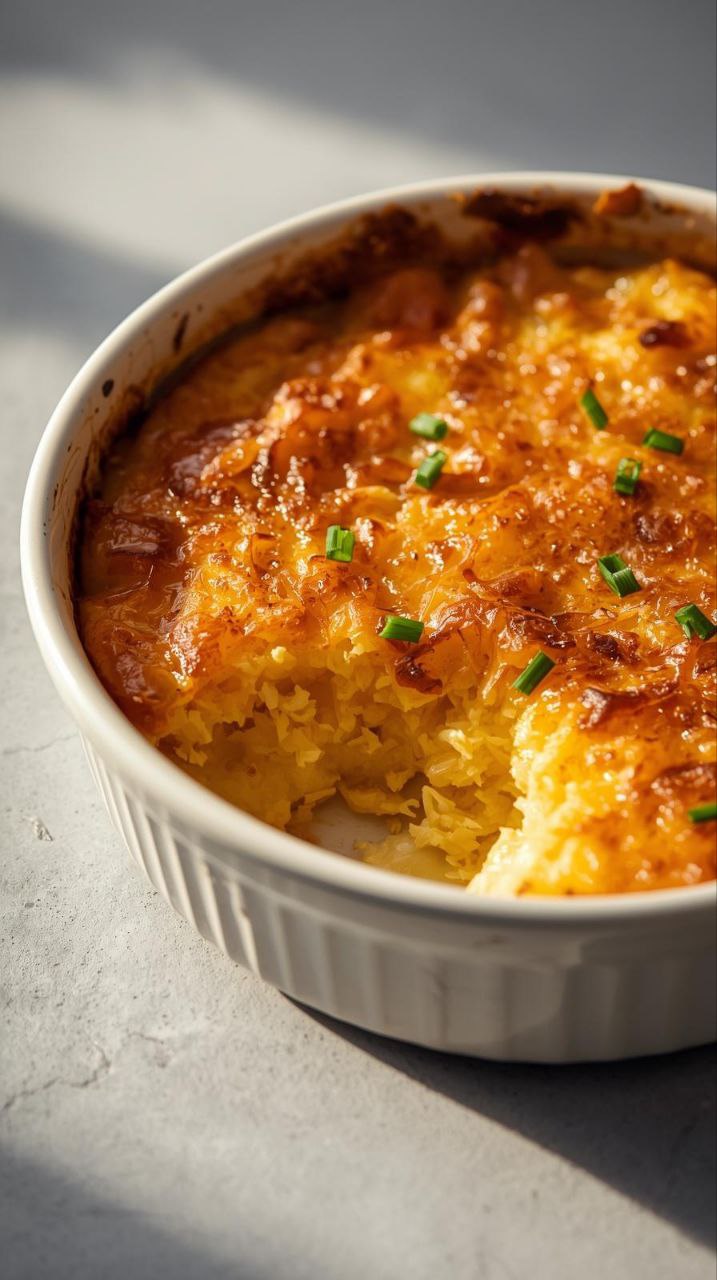
This hash brown breakfast casserole is a protein-set system supported by a starch base.
The egg network forms the primary structure.
The shredded potato layer stabilizes that network by absorbing free moisture and preventing collapse.
Fat moderates protein tightening.
Salt controls water release.
If the egg layer sets without a stable base, the result is rubbery curd floating in pooled liquid.
If the potato layer is wet or undercooked, steam breaks the set and creates a gummy interior.
If fat is insufficient, the proteins tighten and weep moisture.
The dish works because each layer performs a defined mechanical role:
• Potatoes = moisture absorption + base support
• Eggs = structural set
• Dairy = protein dilution + tenderness
• Fat = lubrication + browning
• Salt = water control + flavor stability
Traditional versions often introduce multiple vegetables, pre-cooked meats, heavy sauces, breadcrumbs, or cheese blends. These additions add water and variability. They increase the risk window and extend cooking time without improving structure.
I remove:
• Excess vegetables
• Multiple cheeses
• Heavy cream sauces
• Breadcrumb toppings
• Pre-cooking steps that duplicate oven heat
This simplified hash brown breakfast casserole relies on fewer ingredients and predictable behavior. It becomes a single-vessel bake with controlled moisture and even setting.
The result is sliceable, reheats cleanly, and holds structure for storage. It supports efficient home cooking and produces consistent results with minimal monitoring.
2. Ingredient Function Analysis
Frozen shredded hash browns (thawed and squeezed dry)
Role: starch base, moisture buffer, structural platform
Why it stays: potatoes absorb excess egg liquid and create a stable foundation that prevents custard separation
Excluded: fresh grated potatoes (inconsistent water content), tater tots (excess oil, uneven density)
If removed: eggs bake directly against the pan; texture becomes dense and rubbery with pooling liquid
Heat behavior: surface browns via dehydration and light Maillard reaction; interior gelatinizes starch at ~65–70°C
Frozen shredded hash browns provide predictable hydration. Thawing and squeezing removes excess water, narrowing the risk window.
Eggs
Role: primary structural binder, protein network
Why it stays: proteins coagulate to form the framework that holds the casserole
Excluded: egg substitutes (weak gel formation), whole egg whites only (too firm)
If reduced: loose structure, poor slicing
If increased excessively: tight, rubbery texture
Heat behavior: proteins denature and cross-link between 62–80°C, forming the set
Eggs define the dish. The casserole is fundamentally an egg gel reinforced by starch.
Whole milk
Role: dilution, moisture, tenderness control
Why it stays: reduces egg protein density so the set remains soft rather than rigid
Excluded: heavy cream (excess fat slows setting), water (no buffering proteins)
If removed: overly firm, dry texture
If doubled: delayed setting, risk of seepage
Heat behavior: moderates temperature rise and distributes heat evenly
Milk extends the protein network and creates a smoother set.
Shredded cheddar cheese (single variety)
Role: fat source, mild emulsifier, surface browning
Why it stays: melts into gaps and reinforces cohesion
Excluded: multiple cheese blends (uneven melt), soft cheeses (excess moisture)
If removed: less cohesion and weaker browning
Heat behavior: melts ~32–35°C, then browns once moisture evaporates
A single firm cheese provides predictable melt behavior.
Breakfast sausage (pre-cooked and drained)
Role: protein mass, rendered fat, flavor
Why it stays: contributes fat and substance without adding water
Excluded: raw vegetables or high-moisture meats
If removed: dish becomes lighter but less satiating
Heat behavior: already cooked; only reheats and browns
Pre-cooking eliminates grease release during the bake, stabilizing the set.
Salt
Role: water regulation, flavor stability
Why it stays: enhances protein hydration and prevents blandness
Excluded: salted seasoning blends
If removed: flat taste, uneven moisture distribution
Black pepper
Role: minimal aromatic contrast
Why it stays: low impact, no structural interference
Excluded: spice mixes or herbs that introduce variability
Total ingredients kept intentionally minimal: 7
This is sufficient for structure. Additional ingredients increase risk without improving integrity.
3. Equipment Rationalization
Required:
• Oven
• Single baking dish (metal or ceramic, 9×13 inch or equivalent)
• Mixing bowl
• Whisk or fork
• Knife
No skillet is required if sausage is pre-cooked.
No food processor is needed.
No multiple bowls improve results.
A metal pan browns faster due to better heat transfer.
Ceramic cooks slower but evenly. Increase time slightly if using ceramic.
If no baking dish: use a deep skillet or any oven-safe pan of similar depth.
One vessel is sufficient. This maintains efficiency and reduces cleanup.
4. Heat, Timing & Structural Control
Browning begins when surface moisture evaporates.
If the oven is too cool, evaporation slows and the top remains pale.
If too hot, edges overcook before the center sets.
Eggs set between 72–80°C internally.
If removed below 70°C, the interior remains liquid.
If above 90°C, proteins tighten and expel water.
Potatoes require early contact with heat to gelatinize starch.
If the base is cold and wet, steam lifts the egg layer and weakens structure.
Carryover cooking raises temperature 3–5°C after removal. Pull the casserole when the center jiggles slightly but no longer flows.
5. Process (Clean Logical Flow)
The oven preheats to stabilize the thermal environment. Starting cold extends the risk window and creates uneven setting.
The thawed potatoes are squeezed until no free liquid drips. This removes excess moisture that would otherwise steam and soften the base. The potatoes spread into the dish and compress into a thin, continuous layer. This compression increases surface contact, allowing faster dehydration and browning.
The sausage distributes evenly across the potatoes. Even spacing prevents localized grease pools and maintains consistent texture.
Eggs, milk, salt, and pepper combine until homogeneous. Over-whisking incorporates excess air, which collapses later and causes uneven texture. Mixing stops once uniform.
The liquid pours slowly over the base. Capillary action pulls the mixture into gaps. Gentle shaking settles air pockets.
Cheese scatters on top, forming a thin melt layer that protects the custard from rapid dehydration while still allowing browning.
The dish enters the oven. Early heat drives evaporation at the surface and begins starch gelatinization in the potatoes. Midway, eggs thicken from liquid to gel; resistance increases when shaken. Toward the end, cheese browns lightly as moisture drops.
Removal occurs when the center shows slight wobble but no liquid movement. Resting allows carryover heat to finish setting. Cooling stabilizes the protein network, enabling clean slices.
6. Overcomplication Audit
• Adding sautéed vegetables — introduces uncontrolled water
• Multiple cheeses — inconsistent melt rates
• Breadcrumb topping — redundant starch layer
• Pre-cooking potatoes separately — unnecessary step
• Cream sauces — excess fat delays set
• Garnishes — no structural function
Each adds variability without improving integrity.
7. Controlled Adaptations
• Swap cheddar for another firm cheese (same moisture)
• Replace sausage with cooked bacon pieces
• Use lactose-free milk
• Use turkey sausage if fat content is similar
No additional prep or timing changes required.
8. Storage & Structural Stability
Cooling tightens the protein network. Texture firms slightly.
Refrigeration for up to 4 days is stable. Moisture migrates slowly into potatoes, softening edges but maintaining sliceability.
Freezing is viable. Ice crystals slightly disrupt the gel, leading to minor crumbliness after thawing.
Reheating above 90°C causes moisture loss and rubbery texture. Gentle reheating preserves structure.
9. Efficiency FAQ
Can I skip preheating?
No. Uneven setting occurs.
Can I double it?
Yes, use two pans.
Can I reduce fat?
Slightly, but texture firms.
Can I cook ahead?
Yes. Reheat portions.
Why is it watery?
Potatoes were not dried or oven too cool.
Why rubbery?
Overbaked or excess eggs.
10. Minimal Recipe Card
Hash Brown Breakfast Casserole
Prep Time: 10 minutes
Cook Time: 40 minutes
Total Time: 50 minutes
Servings: 6–8
Ingredients
• 500 g frozen shredded hash browns, thawed and squeezed dry
• 8 eggs
• 1 cup whole milk
• 1 cup shredded cheddar
• 225 g cooked breakfast sausage
• 1 tsp salt
• ½ tsp black pepper
Method
- Preheat oven to 375°F / 190°C.
- Press potatoes into greased dish.
- Scatter sausage evenly.
- Whisk eggs, milk, salt, pepper.
- Pour over base.
- Add cheese on top.
- Bake 35–45 minutes until center just set.
- Rest 10 minutes before slicing.
This hash brown breakfast casserole remains structurally reliable, uses fewer ingredients for better results, and supports efficient home cooking through controlled heat and moisture.

Hi, I’m Olivia Bennett. I approach home cooking with a focus on structure, heat control, and efficiency.
I believe most recipes become complicated because unnecessary steps and decorative ingredients are added without purpose. In my kitchen, I reduce dishes to their essential functional components. I prioritize technique over quantity, clarity over tradition, and repeatable results over presentation.
The recipes I share are designed to be structurally reliable. I focus on moisture balance, timing predictability, and heat behavior so that each dish performs consistently without excess steps or supervision.
This is efficient home cooking built on cause-and-effect logic — fewer ingredients, better results.