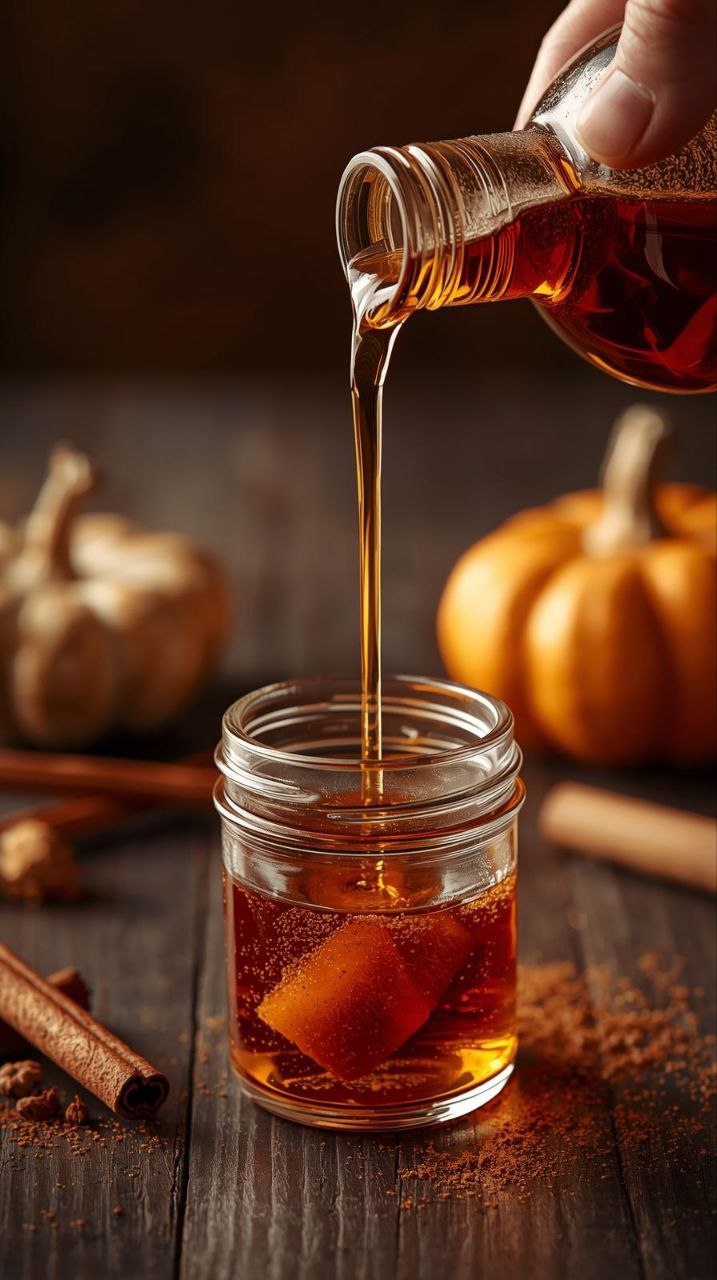
Pumpkin spice syrup is not a flavor blend. It is a sugar–water concentration system that must reach a specific dissolved-solids ratio to remain shelf-stable, pourable, and homogeneous. The spices and pumpkin are secondary. Sugar concentration is what holds the structure together.
Traditional versions treat this as a flavored sauce. They add cream, purée, cornstarch, or excessive spice sediment. These additions disrupt solubility and shorten stability. The result separates in the refrigerator, scorches during heating, or forms sludge at the bottom of the bottle.
I remove anything that interrupts the dissolved sugar matrix.
At its core, pumpkin spice syrup is:
• water (solvent)
• sugar (structure + preservation)
• spice extract (volatile aromatics)
• minimal pumpkin solids for identity
• acid + salt for flavor stabilization
The defining structural ratio is 2 parts sugar : 1 part liquid by weight. Below this, microbial stability decreases and the syrup tastes thin. Above this, crystallization risk increases and pouring becomes slow.
Most café-style syrups are clear because clarity equals predictability. I keep a small amount of pumpkin purée only for flavor density, not body. Thickening agents are unnecessary. Viscosity comes from sugar concentration alone.
This version is intentionally reduced from traditional stovetop “pumpkin sauce” methods that include dairy, starch, or long spice simmering. Those steps add complexity without improving structural function.
The goal is:
• dissolved
• stable
• smooth
• low sediment
• repeatable thickness
This pumpkin spice syrup behaves like a controlled sugar solution. When the ratio is correct and evaporation is limited, the result is consistent every time with minimal monitoring and minimal cleanup.
Ingredient Function Analysis
Sugar (granulated white sugar)
Functional role:
Primary structure, preservation, viscosity, water activity reduction.
Why it stays:
Sugar defines syrup behavior. Dissolved sugar increases density and thickness while lowering free water. This creates stability and shelf life.
What was excluded:
Brown sugar blends, honey, maple syrup, or multiple sweeteners. Mixed sugars introduce unpredictable crystallization behavior and inconsistent viscosity.
If removed:
The mixture becomes flavored water. No thickness. Spoils quickly.
Chemical impact:
Sucrose dissolves and increases solution solids. At ~65–70° Brix, microbial growth is limited and the solution flows like syrup.
Water
Functional role:
Solvent that dissolves sugar and extracts spice aromatics.
Why it stays:
Controls viscosity and heat transfer. Allows even dissolution without caramelization.
What was excluded:
Milk, cream, nut milks. Dairy proteins scorch and reduce stability.
If removed or reduced excessively:
Sugar melts instead of dissolves, creating caramel. Texture becomes sticky rather than pourable.
Heat behavior:
Water absorbs heat and prevents scorching during dissolution.
Pumpkin Purée (plain, unsweetened)
Functional role:
Flavor carrier and slight body.
Why it stays:
Provides characteristic pumpkin note and mild starch that slightly thickens without needing added thickeners.
What was excluded:
Large purée quantities or pumpkin pie filling. Too many solids create separation and sediment.
If removed:
Flavor becomes only spice-sugar. Lacks pumpkin identity.
Heat behavior:
Starches swell mildly but remain suspended if quantity is low. Excess causes pasty texture.
Pumpkin Spice Blend (cinnamon, ginger, nutmeg, clove)
Functional role:
Volatile aromatics.
Why it stays:
Defines sensory profile.
What was excluded:
Whole spices simmered long, vanilla beans, extra extracts. Extended heating drives off aromatics and complicates straining.
If removed:
Sweet pumpkin water. No spice character.
Heat behavior:
Aromatics extract quickly in hot water; prolonged boiling reduces potency.
Salt
Functional role:
Flavor amplifier.
Why it stays:
Reduces perceived bitterness and sharpens sweetness.
What was excluded:
Multiple flavor enhancers. One pinch is sufficient.
If removed:
Flavor tastes flat and overly sweet.
Chemical impact:
Does not affect structure at this level.
Apple Cider Vinegar or Lemon Juice
Functional role:
Acid balance and slight preservation.
Why it stays:
Brightens flavor and slows microbial growth.
What was excluded:
Cream of tartar or strong acids. Unnecessary.
If removed:
Taste becomes heavy and sweet.
Chemical impact:
Mild acidity helps prevent sucrose crystallization.
Cornstarch or Thickener (intentionally excluded)
Reason for exclusion:
Adds opacity, requires simmering, creates gel instead of syrup, and destabilizes storage. Viscosity should come only from sugar concentration.
Dairy or Fat (intentionally excluded)
Reason for exclusion:
Shortens shelf life, separates, requires refrigeration, increases cleaning complexity.
The final ingredient list remains short because each component performs a structural role. Anything decorative or redundant is removed.
3. Equipment Rationalization
Required
• Medium saucepan
• Heat source (stovetop or induction)
• Spoon or spatula
• Fine strainer (optional)
• Bottle or jar
Why only these
The system requires only dissolution and brief extraction. No blending, whisking, or baking. Fewer tools reduce heat loss and cleanup.
Heat source considerations
Moderate heat is sufficient. High heat risks caramelization and evaporation imbalance. Induction or gas both work; stable control matters more than power.
Pan selection logic
A heavy-bottom saucepan distributes heat evenly and prevents hot spots that cause sugar scorching. Thin pans create localized overheating.
If a strainer is unavailable
Allow sediment to settle and pour off clear syrup. Spices will sink during cooling.
No thermometers or specialty tools are necessary. Visual cues are enough.
4. Heat, Timing & Structural Control
Dissolution phase
If heat is too low, sugar dissolves slowly and encourages stirring that incorporates air.
If heat is too high, water evaporates quickly and concentration rises prematurely.
Goal: gentle simmer.
Extraction phase
Spices release aromatics rapidly between 70–90°C. Prolonged boiling drives off volatile compounds.
If boiled aggressively, flavor weakens.
Evaporation control
Evaporation thickens syrup. Excess evaporation causes over-concentration and crystallization after cooling.
If steam loss is high, syrup becomes sticky and grainy.
Internal indicators
Fully dissolved solution appears clear and glossy with no visible crystals.
Carryover
After heat removal, temperature remains high and continues dissolving solids. Do not reduce further.
Cooling behavior
As temperature drops, viscosity increases naturally. Thickness should be judged only when cooled, not hot.
5. Process (Clean Logical Flow)
Water and sugar enter the pan together so dissolution begins evenly. Dry sugar placed in an empty hot pan caramelizes before dissolving.
Heat is applied gradually. The liquid transitions from cloudy to clear as crystals disappear. This visual change confirms full dissolution. Stirring remains minimal; motion is only to prevent sticking.
Once clear, pumpkin purée is added. The mixture becomes slightly opaque and thicker. This indicates starch dispersion. The amount remains small enough to stay fluid.
Spices and salt follow. Aromatics extract quickly in hot liquid. Gentle simmering continues briefly. Extended boiling is avoided to protect volatile compounds.
Acid is added last. Adding acid early can alter flavor extraction and increase evaporation time. Late addition preserves brightness.
Heat is removed as soon as aroma intensifies and the liquid appears uniform. The syrup rests. Sediment settles.
Optional straining removes larger spice particles. The liquid pours easily while warm but thickens as it cools. Final texture resembles commercial coffee syrup: smooth, cohesive, non-gelatinous.
Transfer to container while warm for easy flow.
The pumpkin spice syrup is now structurally complete.
6. Overcomplication Audit
Blending after cooking
Creates unnecessary aeration and cleaning. Dissolution already achieved smoothness.
Long spice simmer (20–30 minutes)
Drives off aromatics and darkens flavor.
Cornstarch thickening
Produces paste, not syrup. Requires constant stirring.
Multiple sweeteners
Unpredictable crystallization and inconsistent viscosity.
Adding dairy
Short shelf life and separation.
Using several pans
Increases heat loss and cleanup without benefit.
Each removal simplifies structure and improves repeatability.
7. Controlled Adaptations
Maple sugar swap for white sugar
Maintains similar dissolution behavior. Flavor changes only.
Fresh ginger instead of ground
Heat behavior similar. Remove solids by straining.
Stronger spice concentration
Increase spice only, not liquid. Maintains ratio.
Alcohol splash (e.g., bourbon)
Small quantity only. Do not exceed 5% volume to preserve viscosity.
Each change preserves timing and structure.
8. Storage & Structural Stability
High sugar concentration lowers free water, slowing spoilage.
Over time:
• Sediment settles
• Viscosity increases in refrigerator
• Aromatics fade gradually
Moisture migration is minimal because no dairy or starch gel is present.
Refrigerated syrup remains stable for 2–3 weeks. Room temperature stability depends on cleanliness and sugar concentration.
Freezing is viable but may cause slight separation. Shake to recombine.
Crystallization indicates excessive evaporation or low acid. Gentle reheating dissolves crystals.
Texture cannot be restored if burned or over-reduced.
9. Efficiency FAQ
Can I skip heating?
No. Sugar will not dissolve completely.
Can I double the recipe?
Yes. Use wider pan to maintain evaporation rate.
Can I reduce sugar?
Yes, but shelf life and viscosity decrease.
Can I use brown sugar?
Possible, but clarity and consistency decline.
Can I cook ahead?
Yes. Designed for storage.
Why did crystals form?
Over-concentration or insufficient acid.
10. Minimal Recipe Card
Pumpkin Spice Syrup
Prep Time: 5 minutes
Cook Time: 8 minutes
Total Time: 13 minutes
Servings: ~1½ cups
Ingredients
1 cup water
2 cups granulated sugar
¼ cup pumpkin purée
1½ tsp pumpkin spice blend
Pinch salt
1 tsp apple cider vinegar or lemon juice
Method
- Combine water and sugar in saucepan.
- Heat gently until fully dissolved and clear.
- Stir in pumpkin, spices, and salt. Simmer briefly.
- Remove from heat and add acid.
- Strain if desired and cool.
- Bottle and refrigerate.
This pumpkin spice syrup prioritizes ratio control and dissolved solids over decoration. The result is a structurally reliable recipe suited to minimalist cooking, efficient home cooking, and fewer ingredients with better results.

Hi, I’m Olivia Bennett. I approach home cooking with a focus on structure, heat control, and efficiency.
I believe most recipes become complicated because unnecessary steps and decorative ingredients are added without purpose. In my kitchen, I reduce dishes to their essential functional components. I prioritize technique over quantity, clarity over tradition, and repeatable results over presentation.
The recipes I share are designed to be structurally reliable. I focus on moisture balance, timing predictability, and heat behavior so that each dish performs consistently without excess steps or supervision.
This is efficient home cooking built on cause-and-effect logic — fewer ingredients, better results.